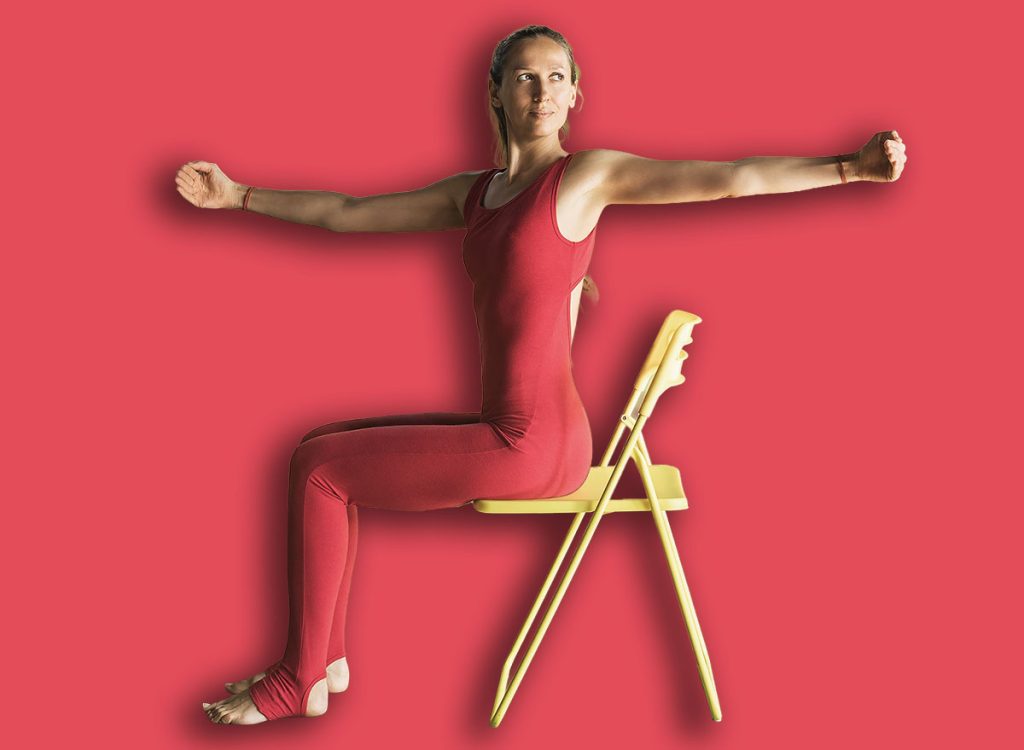
Woman practicing yoga therapy, performs a lateral twist while sitting on a chair in the studio
You’ve done the hard part. The physical therapy sessions are complete, you’ve been discharged, and you’re officially “healed.” But here’s the thing—that final PT appointment often feels less like a finish line and more like being dropped off at the edge of a forest with no map. What now? How do you bridge that gap between clinical recovery and feeling truly strong, confident, and ready for your life and workouts again?
That’s where a smart post-rehab fitness protocol comes in. It’s your personalized roadmap for the next phase. Let’s dive into practical, safe strategies for common non-surgical injuries, so you can rebuild not just tissue, but trust in your own body.
The Post-Rehab Mindset: It’s Not Just “More Exercise”
First, a quick reframe. Post-rehab isn’t about jumping back into your old routine with gusto. Think of it like relearning a language after a head injury—you know the words, but the fluency is rusty. The goal is re-conditioning, not just exercising. You’re teaching your body new, efficient movement patterns while continuing to address the underlying weaknesses that likely contributed to the injury in the first place.
Honestly, the biggest mistake people make is rushing this stage. Your pain is gone, sure, but the tissue remodeling and neuromuscular control are still playing catch-up. Patience here isn’t passive; it’s strategic.
Protocols for Three Common Culprits
1. Rotator Cuff Tendinopathy (That Nagging Shoulder)
This one’s a classic. The inflammation is down, but the shoulder still feels… unreliable. The post-rehab focus shifts from basic strengthening to integrating the shoulder with the entire kinetic chain—your scapula, thoracic spine, and core.
Phase 1: Controlled Capacity (Weeks 1-4)
You’re building a tolerance for load. Forget heavy overhead presses.
- Isometric Holds: Push into a wall with elbows bent (scapular plane). Hold for 30 seconds. It’s boring, but it builds stability without irritation.
- Band Pull-Aparts: With a light band, focus on squeezing your shoulder blades together. Slow tempo.
- Prone Y-T-Ws: Lying on your stomach, lift arms into Y, T, and W shapes. This is gold for scapular control.
Phase 2: Integrated Strength (Weeks 4+)
Now we make it functional.
- Landmine Press: A godsend for post-rehab shoulder fitness. The arc is natural, the load is manageable.
- Carries: Farmer’s carries, suitcase carries. They force your entire core and shoulder to work as a unit.
- Push-Up Progressions: Start with hands elevated on a bench, focusing on perfect scapular movement.
2. Low Back Strain (The Dreaded “Tweak”)
Back strains are sneaky. You feel fine walking, but bending? Twisting? A wave of caution hits. Post-rehab here is about building a resilient “cylinder” of strength around your spine—your abs, obliques, and glutes.
The key is to train anti-movements. You know, resisting forces rather than creating them.
| Exercise | Purpose | Progression Cue |
| Dead Bug | Anti-extension (preventing arch) | Move slower, add a light tempo pause. |
| Bird-Dog | Anti-rotation & coordination | Extend opposite arm/leg only as far as you can keep your hips square. |
| Pallof Press | Anti-rotation under load | Use a cable or band. Stand further away to increase lever arm. |
| Glute Bridge | Re-activate dormant glutes | Single-leg variation, pause at the top. |
Avoid heavy spinal loading (squats, deadlifts) initially. Instead, master hip-hinging with a kettlebell or dowel rod. The movement pattern is more important than the weight.
3. Ankle Sprain (Beyond the Brace)
An ankle sprain, even a mild one, can mess with your proprioception—your body’s internal GPS. The joint heals, but the brain-joint connection gets fuzzy. Post-rehab fitness for ankles is largely neuromuscular re-education.
Balance is Your Foundation:
Start simple. Stand on one leg while brushing your teeth. Progress to unstable surfaces (a folded towel, then a foam pad). Close your eyes—it’s a game-changer that forces your ankle to talk to your brain without visual cues.
Plyometrics Re-Introduction (The Right Way):
Jumping straight to box jumps is asking for trouble. Here’s a safer ladder:
- Pogos: Small, quick, two-footed hops in place. Focus on a stiff spring-like ankle.
- Line Hops: Hop side-to-side over a line, focusing on a “quiet” landing (no wobble).
- Low Box Hops: Onto a 6-inch platform, stepping down. Control the descent.
- Single-Leg Hops (Late Stage): Only when you can land and hold for 3 seconds without a wobble.
Golden Rules for Any Post-Rehab Fitness Journey
No matter the injury, a few principles always apply. Think of them as your guardrails.
- Pain is Your Guide, Not Your Goal: A little muscle fatigue is fine. Sharp, familiar pain? That’s a stop sign. Differentiate between “working” and “hurting.”
- Quality Over Everything: That tenth rep with sloppy form doesn’t count. It subtracts. Film yourself, or work with a coach who understands post-rehab.
- Asymmetry is the Enemy: You will have a “good side.” But constantly favoring it just reinforces imbalance. Train unilaterally (one limb at a time) to bring the weaker side up to speed.
- Consistency Trumps Intensity: 15 minutes of daily, focused work beats one heroic, risky hour on Saturday.
When to Seek Help (Again)
It’s okay to not have all the answers. If you hit a plateau, or if fear is genuinely holding you back from daily activities, consider a few sessions with a corrective exercise specialist or a strength coach with rehab experience. They can tailor this bridge phase for you. It’s a sign of proactivity, not failure.
Well, that’s the deal. Post-rehab fitness isn’t a straight road back to where you were. It’s a detour that, if navigated thoughtfully, can actually lead you to a stronger, more resilient place than before the injury. You rebuild the tissue, sure, but you also rebuild confidence—brick by careful brick. And that might just be the most valuable outcome of all.