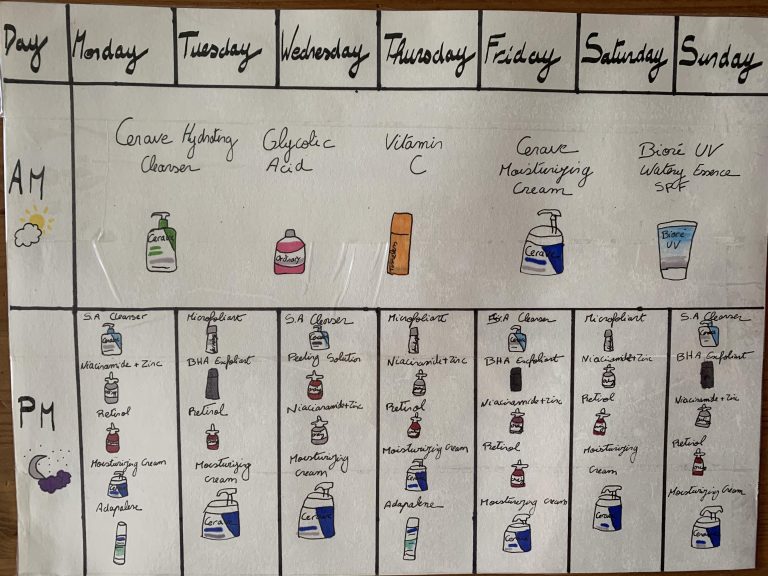
You know that feeling—the one where your face feels tight, looks a little shiny in a weird way, and stings when you apply even the gentlest moisturizer? Yeah, that’s the classic over-exfoliation hangover. Honestly, it’s a rite of passage for many of us who got a little too enthusiastic with the acids or that gritty physical scrub. But here’s the thing: it’s fixable. Your skin barrier isn’t broken forever; it’s just waving a white flag and asking for a ceasefire.
Let’s talk about what “barrier repair” actually means. Your skin’s outermost layer is like a brick wall—the skin cells are bricks, and the lipids (ceramides, cholesterol, fatty acids) are the mortar. Over-exfoliation strips away that mortar, leaving gaps. Water escapes (transepidermal water loss, or TEWL), irritants get in, and everything feels reactive. So, the repair routine isn’t about adding more active ingredients. It’s about rebuilding that wall, brick by brick, while you stop hammering at it.
Step One: The Immediate Ceasefire (Days 1-3)
First things first—put down the retinol. And the glycolic acid. And that konjac sponge you love. For the next 72 hours, your routine should be embarrassingly simple. I’m talking wash, moisturize, protect. That’s it. No serums, no toners, no “detoxifying” masks. Your skin is in shock; you wouldn’t feed a person with a stomach flu a five-course meal, right? Same logic.
During this phase, you’ll want to wash with lukewarm water—hot water feels nice but it strips lipids like a harsh detergent. Use a milky, non-foaming cleanser. If your face feels tight after cleansing, you’ve chosen the wrong one. It should feel like you’re washing with a light lotion, not a soap.
The “Slugging” Alternative (If You Dare)
Some people swear by applying a thin layer of Vaseline or Aquaphor over their moisturizer at night. It’s called slugging. It’s occlusive, meaning it forms a physical barrier to stop water from escaping. But for sensitive, over-exfoliated skin, I’d be a little cautious. If you’re prone to milia (those tiny white bumps), skip it. Instead, try a heavier cream with shea butter or squalane. You want the same effect without the suffocating feeling.
Step Two: Rebuilding the Mortar (Days 4-7)
Okay, the stinging has subsided. Maybe your skin still feels a bit rough, but it’s not angry anymore. Now you can start introducing barrier-repairing ingredients—but slowly. This isn’t the time to try a new 10% niacinamide serum. You want formulations that mimic your skin’s natural lipid ratio.
Look for these key players:
- Ceramides (especially Ceramide NP, AP, EOP) – These are the literal building blocks of your skin’s mortar. They’re the most important.
- Cholesterol – Often forgotten, but crucial for the lipid matrix to stay flexible.
- Fatty acids (like linoleic acid) – These help seal the deal, so to speak.
- Panthenol (Vitamin B5) – A soothing humectant that calms redness and helps healing.
- Centella Asiatica (Cica) – A plant extract known for its anti-inflammatory properties. Great for that “hot” feeling.
Here’s a tip that took me way too long to learn: apply your moisturizer to damp skin. Not dripping wet, but slightly damp. That way, you’re trapping that water into the skin with the lipids. It’s like sealing a sponge that’s already soaked—you lock in the moisture rather than just coating the surface.
Step Three: The Long Game (Weeks 2-4)
After a week, your skin should feel less reactive. But don’t get cocky. The barrier is still thin, like a scab that hasn’t fully formed. You can start adding a very gentle antioxidant serum in the morning—something with vitamin C derivatives (like magnesium ascorbyl phosphate) rather than pure L-ascorbic acid, which can be irritating at high percentages.
Also, this is non-negotiable: SPF 30 or higher, every single day. Over-exfoliated skin is hyper-sensitive to UV damage. Sun exposure will undo all your repair work and cause more inflammation. If you hate sunscreen texture, try a mineral one with zinc oxide—it sits on top and reflects light, which is actually soothing for irritated skin.
What About Exfoliation Later?
You’re probably wondering, “Can I ever exfoliate again?” Sure, but you’ll need to redefine your relationship with it. After a month of repair, you can reintroduce a very mild PHA (like gluconolactone) once a week. PHAs are larger molecules that don’t penetrate as deeply, so they’re gentler. Or stick to a soft washcloth and gently rub in circles—that’s physical exfoliation, but you control the pressure.
Honestly, your skin doesn’t need daily exfoliation. It exfoliates itself every 28 days or so. Your job is just to help it along, not rush it. Think of it like this: you’re the gardener, not the bulldozer.
A Sample Routine for Reference
Here’s a bare-bones template. Adjust based on what you have, but keep it minimal. Your skin will thank you.
| Time | Product Type | Example Ingredient |
|---|---|---|
| AM | Gentle cleanser | Milk cleanser with glycerin |
| AM | Barrier cream | Ceramide + squalane moisturizer |
| AM | Mineral SPF 30+ | Zinc oxide (no fragrance) |
| PM | Gentle cleanser | Same as AM (no double cleansing) |
| PM | Barrier repair balm | Panthenol + shea butter |
| PM | (Optional) Occlusive | Thin layer of Vaseline on dry patches only |
Notice what’s missing? Toner. Essence. Ampoules. Eye cream. All that stuff can wait. When your barrier is compromised, less is literally more. Your skin’s microbiome—the good bacteria living on it—also needs a break. Over-washing and over-layering disrupts that ecosystem too.
Things That Will Sabotage Your Repair
Let’s be real—it’s not just about what you put on your face. Lifestyle factors play a huge role. And I’m not telling you to never have fun, but consider these:
- Hot showers. Keep the water lukewarm and avoid letting the spray hit your face directly. Steam is fine, but direct hot water is a no-go.
- Alcohol-based toners. Even the ones with “rose water” can be drying if they contain denatured alcohol. Check the label.
- Over-washing. Twice a day is enough. If you work out, just rinse with water after—don’t re-cleanse.
- Picking or rubbing. I know it’s tempting to rub off flaky skin. Don’t. Let it fall off naturally.
- Stress. Cortisol spikes increase inflammation. Easier said than done, but try to get some sleep. Your skin repairs itself at night, not during your 3am doom-scrolling session.
When to See a Dermatologist
If after two weeks of this gentle approach you still have severe redness, swelling, or weeping patches, stop guessing. See a professional. Sometimes over-exfoliation leads to secondary infections or triggers conditions like perioral dermatitis. There’s no shame in getting a prescription for a barrier-repair cream or even a short course of topical steroids. Your skin is an organ, and organs sometimes need medical help.
On the flip side, if you’re just dealing with tightness and flakiness, you’re on the right track. It takes about 4-6 weeks to see a significant improvement in barrier function. That’s not a quick fix—it’s a healing process. And honestly, that’s okay. In a world of 10-step routines and instant gratification, learning to do less is actually the most advanced skincare skill you can master.
So, take a breath. Your skin isn’t “ruined.” It’s just asking for a simpler life. Give it that, and it’ll bounce back—maybe even stronger than before. The glow you’re chasing isn’t from more acids; it’s from a healthy, resilient barrier that reflects light evenly. That’s the real secret. And it starts with putting down the exfoliator and picking up a basic moisturizer.
Your future, calmer skin is already waiting. You just need to stop getting in its way.